
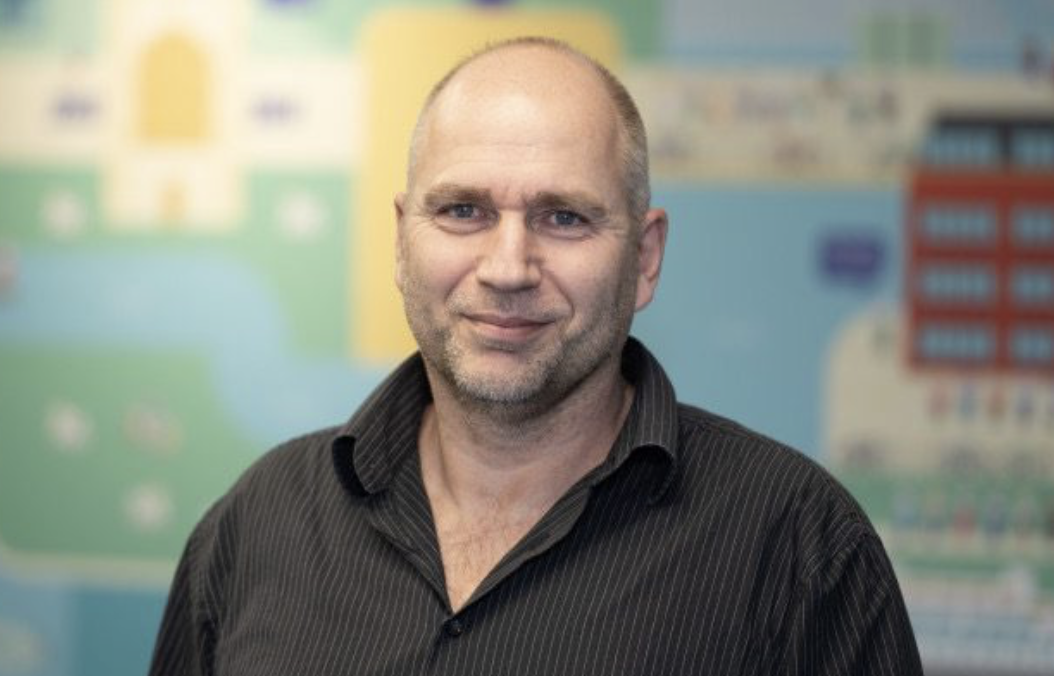

Klaas Wierenga, the creator of eduroam, is one of our Keynote Speakers for APAN62 in Auckland this August.
For the research and innovation community, it’s a rare chance to hear directly from someone whose work underpins everyday research life.
Below, we start the conversation with a few questions about eduroam and how its creation has shaped his world ever since.
You created eduroam more than 20 years ago. When you see a student or researcher opening their laptop and connecting instantly today, what part of that global system would surprise the Klaas Wierenga of 2002?
Above everything, the scale. This started as a small experiment with pipedreams of national coverage. Not in my wildest dreams could I have thought that we would get to well over 100 countries, almost 50000 hotspot locations and 9.2 billion roaming operations in 2025 alone.
You were inducted into the Internet Hall of Fame for creating eduroam. But what moment made you realise the idea had truly taken off?
In the early days of eduroam, I was walking through Paris when all of a sudden, my e-mail started to come in on my phone. I thought I had forgotten to turn off data roaming, but it turned out that I was connected to eduroam at, as I discovered later, a building of Sorbonne University. That was the moment I reaalised this wild idea could actually have legs.
New Zealand is geographically remote but deeply connected in global science. How important are services like eduroam in reducing barriers of distance for researchers and students here?
Well, first science, but now also education have become truly global. It is hard to overestimate the value of seamless connectivity to the network and to data. By providing students and researchers in New Zealand federated access to the network with eduroam and to applications and data through Tuakiri, the New Zealand research and education community is, despite the geographical distance, a full-blown member of the international community.
I do believe that eduroam is first and foremost beneficial for domestic use. The ratio of local vs national vs international roaming is somewhere between 5 and 10, in other words, the number of on campus authentications is an order of magnitude bigger than the the number of in-country roaming authentications which in turn is much bigger than the number of international authentications, presumably in New Zealand even more so. So you will probably see most benefit within New Zealand.
What these federated services, eduroam and eduGAIN (through Tuakiri) brings is a connected world. Apart from the time zone challenges, it doesn’t matter where you are in the world. And that, in turn, allows researchers and students from remote or underdeveloped parts of the world to be a full member of the global community.
Eduroam runs with trust as an underlying principle. At a time when cyber threats are rising, why has that trust model worked and what does it teach us about building secure global networks?
There are a number of reasons. First of all, from the start we have assumed that the global, RADIUS-based trust fabric that underpins eduroam is inherently insecure. While we take reasonable measures to secure the infrastructure, we know there will be weak links. We just make sure that local issues have no global impact, and that we have support infrastructure that is able to deal with it (and ultimately disconnect misbehaving institutions).
Having said that, we constantly work together as a community to raise the bar, by improving peer validation, and by enabling direct peer to peer connections between institutions. But the emphasis in the trust model is on the one-to-one trust relationship between the user and their home institution. Over the years we have improved that trust relationship, to raise the security bar, to make enrolment more secure, and to educate users. But ultimately, this is the responsibility of the institution.
What we have learned is that trust fundamentally doesn’t scale, it is always peer to peer. By building on top of the human trust model that exists within the global R&E community we have managed to extend this localised trust to something much broader, but within the relatively limited scope of access to the (guest) network. Looking at eduGAIN the same principle applies, eduGAIN in essence just provides a list of entities that are part of eduGAIN, the real trust establishment is between the Service Provider and the Identity Provider of the user.
Countries that have broad participation in identity federations seem to move faster in research collaboration. What advantages do they gain compared with countries where participation is fragmented?
I believe it is all about lowering barriers for entry. Having to build a car before going on holidays is probably going to dampen any enthusiasm for traveling. Building a research collaboration should be about the scientific process, not about the administration.
We see for example in Europe that the group management facilities that we built on top of eduGAIN for federated access to High Performance Computing and to the European Open Science Cloud (MyAccessID) have dramatically reduced the overhead for forming research collaborations, especially if those collaborations cross scientific disciplines, and that in turn allows the scientists to focus on research (and maybe on securing funding), rather than on administrative hassle.
What do you think the next 'eduroam-scale' breakthrough could be for global research networks?
That is really a tough question. To be honest, I don’t think we can know at this time. I have a newspaper article from the year 2000 in which it was argued that the Internet was already past its prime and as I mentioned before, I could never have dreamed about the global success of eduroam.
What I do believe in is creating the circumstances to make that next big thing possible. A term that is being used often in this context is ‘permissionless innovation’. If we create a federated, globally connected ecosystem, someone with a bright idea will emerge. We need to be ready to embrace it and help to bring it to fruition, just as hundreds (if not thousands) of individuals bought into the concept of eduroam and built it into what it is today.
Questions?
There’s a lot happening as APAN62 takes shape. Registration is now open (Early Bird rates end on 30 June 2026), there is a Call for Papers open for the co-located APANConf event (Submission deadline is 15 May 2026), and we're aiming to publish the full APAN event programme by mid-May. In the meantime, visit our Programme Overview page for a high-level look at the week.
If you have any questions about APAN62, email [email protected].